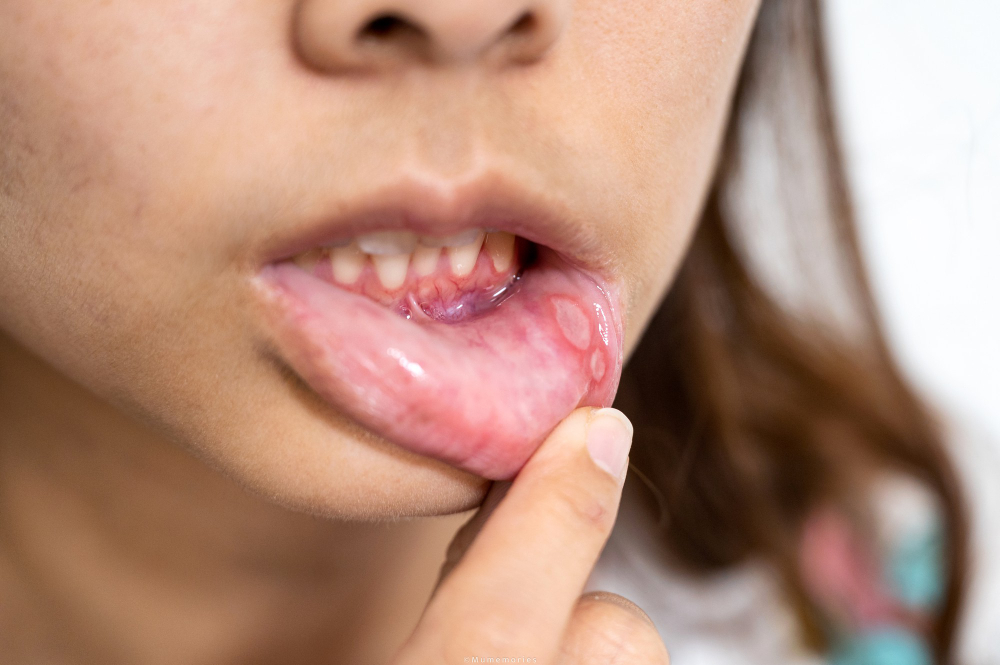
What is an Oral Ulcer?
An oral ulcer is a small, painful sore that forms inside the mouth. You may find it on the tongue, gums, or inner cheeks. Often, these sores make eating or talking uncomfortable. Oral ulcers are common and usually heal on their own. However, some may last longer or return often. Because of this, many people look for ways to ease pain and speed up healing.
Common Symptoms of Oral Ulcers
Oral ulcer symptoms can vary, but most people notice:
Usually, these symptoms last for one to two weeks. But if they last longer, you should seek help.
Causes and Risk Factors
There are many causes of oral ulcers. Some common reasons include:
In addition, family history can increase your risk. According to the World Health Organization (WHO), most oral ulcers are not serious. Yet, some may signal other health problems.
How Oral Ulcers are Diagnosed
Usually, a dentist or doctor can diagnose an oral ulcer by looking at it. They may ask about your symptoms and health history. Sometimes, they will check for other causes, like infections or allergies. In rare cases, they may take a small sample (biopsy) to rule out more serious issues. Early diagnosis helps guide the right oral ulcer treatment.
Treatment Options for Oral Ulcers
Most oral ulcers heal without treatment. However, you can try these steps to ease pain and speed healing:
Sometimes, a doctor may prescribe stronger medicines or mouth rinses. If ulcers are large, last more than two weeks, or keep coming back, you should see a dentist. The Centers for Disease Control and Prevention (CDC) recommends seeking care if you have severe pain or trouble eating.
Prevention Tips and Lifestyle Guidance
While you cannot always prevent mouth ulcers, you can lower your risk. Try these tips:
By following these steps, you can reduce the chance of getting oral ulcers. For more tips on how to prevent mouth ulcers, ask your dental specialist.
When to See a Dentist
Most oral ulcers heal on their own. However, you should see a dentist if:
Early care can help find and treat any underlying problems.
In summary, oral ulcers are common but often harmless. Still, they can cause pain and discomfort. If you have concerns, consult a dental specialist at Arun Dental Clinic for personalized advice on oral ulcers.